
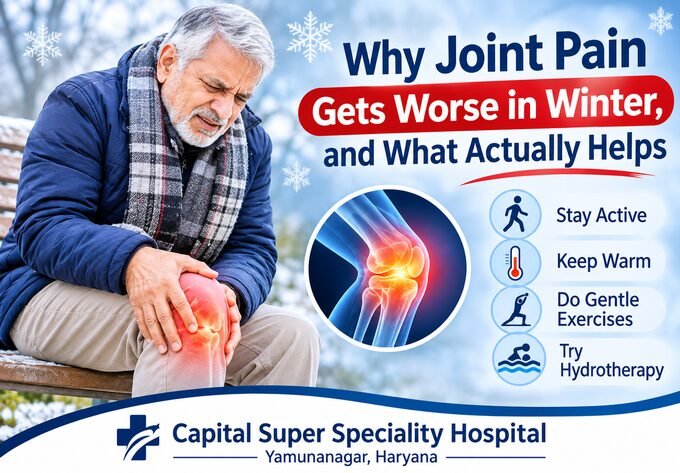
Many people notice that their knees feel stiff on cold mornings. Getting out of bed takes longer, climbing stairs feels harder, and an old ache returns. If this sounds familiar, you are not alone. Joint pain in winter is one of the most common complaints in orthopaedic clinics, especially among older adults and people with arthritis.
Understanding why it happens, and what you can do about it, can help you stay active and comfortable through the colder months.
Why Does Joint Pain Get Worse in Winter?
Researchers haven’t found one clear answer, and studies on weather and joint pain show mixed results. Cold weather does not cause arthritis, but several factors may make existing pain feel worse.
- Cold and stiffness: Cold temperatures can make the muscles and tissues around the joints tighten. This can lead to winter joint stiffness, especially in the morning.
- Less activity: Short days and chilly weather make many people stay indoors and sit for long hours. Joints like movement, and long periods of rest can make them feel stiffer.
- Air pressure changes: Some people feel more pain when air pressure drops before cold or rainy weather. Scientists are still studying why this happens.
- Existing joint conditions: If you already have arthritis or an old injury, you are more likely to notice changes in pain when the weather turns.
Why Does Knee Pain Increase During Winter?
The knee carries your body weight with every step, so it is often the first joint to complain. Knee pain in cold weather can increase for a few reasons:
- Cold muscles around the knee become tight and move less smoothly.
- Less walking can weaken the thigh muscles that support the knee.
- Existing problems, such as worn cartilage (the smooth cushion inside a joint), can feel more uncomfortable when the joint is stiff.
For example, someone who walks every evening in summer may stop in winter. By January, their knees feel heavier and stiffer, even though nothing new has damaged the joint. This is why knee pain winter complaints are so common.
Common Joint Problems That Can Feel Worse in Winter
- Osteoarthritis: This is the “wear and tear” type of arthritis. It often affects the knees, hips, and hands, and stiffness may feel stronger in cold weather.
- Rheumatoid arthritis: In this condition, the body’s immune system affects the joints. It can cause pain, swelling, and morning stiffness, and some people notice their symptoms change with the seasons.
- Knee joint pain: This can come from arthritis, old injuries, or weak muscles.
- Muscle stiffness and joint inflammation: Tight muscles and mild swelling can make any joint feel more painful in the cold.
What Actually Helps Relieve Joint Pain in Winter?
Simple daily habits can make a real difference. They do not replace medical treatment, but they can support it. Good arthritis winter care starts with these steps:
- Keep moving gently. Short, regular walks are better than long rest. Even walking indoors helps.
- Use warmth. A warm compress or a warm bath can relax tight muscles and ease stiffness.
- Stretch gently. Slow stretches, done after a short warm-up, help keep joints flexible. Stop if a movement causes sharp pain.
- Maintain a healthy weight. Extra weight puts more load on the knees and hips.
- Dress warmly. Layers, warm socks, and knee or elbow warmers can keep joints comfortable outdoors.
- Follow your doctor’s advice. If you take medicines for arthritis, do not stop or change them without asking your doctor.
Can Physiotherapy Help With Winter Joint Pain?
Yes, physiotherapy for joint pain is often a helpful part of care. A physiotherapist checks how your joints move, which muscles are weak, and which daily activities cause trouble. Then they create a plan for you.
Common approaches include:
- Strengthening exercises: Stronger muscles share the load and protect the joint.
- Range-of-motion exercises: These help your joint move as far as it comfortably can.
- Gentle stretching: This reduces tightness and improves flexibility.
- Supervised rehabilitation: A professional guides you step by step, so you exercise safely and at the right pace.
Results differ from person to person, and the right plan depends on your condition.
How Can Hydrotherapy Support Joint Pain Management?
Hydrotherapy means doing exercises in warm water. Water supports your body weight, so there is less pressure on the joints. Warm water can also relax muscles, which may make movement feel easier and more comfortable.
Because of this, hydrotherapy is sometimes used in rehabilitation for people with joint stiffness or arthritis, or those recovering from injury. It does not cure arthritis, and it is not suitable for everyone. It should be done under professional supervision, after a doctor or physiotherapist confirms it is safe for you.
When Should You Consult an Orthopaedic Doctor?
Mild stiffness that eases after a few minutes of movement is common in winter. But some symptoms need medical attention. See an orthopaedic doctor if you have:
- Joint pain that continues or keeps getting worse
- Swelling or redness around a joint
- Difficulty walking or doing daily tasks
- Sudden, severe pain
- Fever with a hot, swollen joint. This needs urgent medical assessment.
Early advice can help you understand the cause and avoid delays in care.
Get Orthopaedic and Physiotherapy Guidance at Capital Super Speciality Hospital
If winter joint pain is affecting your daily routine, you can seek guidance at Capital Super Speciality Hospital, Yamunanagar, Haryana. The hospital’s Orthopaedics and Physiotherapy departments care for joint and mobility concerns.
Dr Sagar Goel (M.B.B.S., M.S.) is an orthopaedic specialist whose listed areas of work include knee and shoulder arthroscopy, sports injuries, chronic pain, and hip and knee joint replacement. For physiotherapy and hydrotherapy guidance, patients can consult Dr Priyanshu PT.
If you have ongoing joint pain, a proper assessment is the best way to find the cause and decide what will help. You can also ask the team whether hydrotherapy suits your condition.
Conclusion
Joint pain in winter is common. Cold weather, reduced activity, and existing conditions like arthritis can all make joints feel stiffer and more painful, even though cold weather does not cause arthritis itself. Staying active, keeping warm, doing the right exercises, and following your doctor’s treatment plan can help you feel more comfortable. If pain is persistent, severe, or comes with swelling or fever, get medical advice early.
Frequently Asked Questions
1. Why does joint pain increase in winter?
The exact reason is not fully clear, and research is mixed. Cold can tighten muscles around the joints, people move less, and some feel more pain when air pressure drops. People who already have arthritis or an old injury notice these changes more.
2. Does cold weather cause arthritis?
No. Cold weather does not cause arthritis. It may make existing joint pain or stiffness feel worse, but it does not create the condition.
3. Why does my knee pain winter flare-up feel worse in the morning?
Joints and muscles stay still overnight, and cold air can add to the tightness. Morning stiffness that eases within a few minutes of moving is common. Stiffness that lasts long or keeps getting worse should be checked by a doctor.
4. Is it safe to exercise when my joints hurt in cold weather?
Gentle movement, such as slow walking and light stretching, is usually helpful. Warm up first and stop if you feel sharp pain. If you are unsure which exercises suit you, ask your doctor or physiotherapist.
5. Do warm compresses and warm baths help joint pain?
Many people find that warmth relaxes tight muscles and eases stiffness. It is a comfort measure, not a cure. Avoid very hot water, and take extra care if you have skin problems or reduced feeling in your skin.
6. What is the best arthritis winter care routine?
Keep moving daily, dress in warm layers, use gentle warmth, and maintain a healthy weight. Take your medicines as your doctor advised. Regular check-ups help you adjust your care as your symptoms change.
7. Can physiotherapy help with winter joint pain?
It often can. A physiotherapist may suggest strengthening, range-of-motion, and gentle stretching exercises based on your condition. Results differ from person to person.
8. What is hydrotherapy, and is it right for everyone?
Hydrotherapy means exercising in warm water, which reduces pressure on the joints. It can support rehabilitation, but it does not cure arthritis and is not suitable for everyone. Ask your doctor or physiotherapist first.
9. When should I see an orthopaedic doctor for joint pain?
See a doctor if pain continues or worsens, a joint is swollen or red, walking or daily tasks become difficult, or the pain is sudden and severe. A hot, swollen joint with fever needs urgent medical assessment.
10. Where can I get orthopaedic and physiotherapy care in Yamunanagar?
You can consult the Orthopaedics and Physiotherapy teams at Capital Super Speciality Hospital, Yamunanagar, Haryana. Please contact the hospital to confirm consultation timings and book an appointment.
This article is for general information and does not replace advice from a doctor. Please consult a qualified healthcare professional about your own condition.